We don’t always realize it right away, but emotional safety is as essential to our well-being as food and water. It’s the invisible container that allows us to be ourselves without fear of judgment, dismissal, or punishment. When it’s missing, the effects can be subtle at first; a tension in your chest, a hesitation before speaking, but over time, it seeps into every part of life.
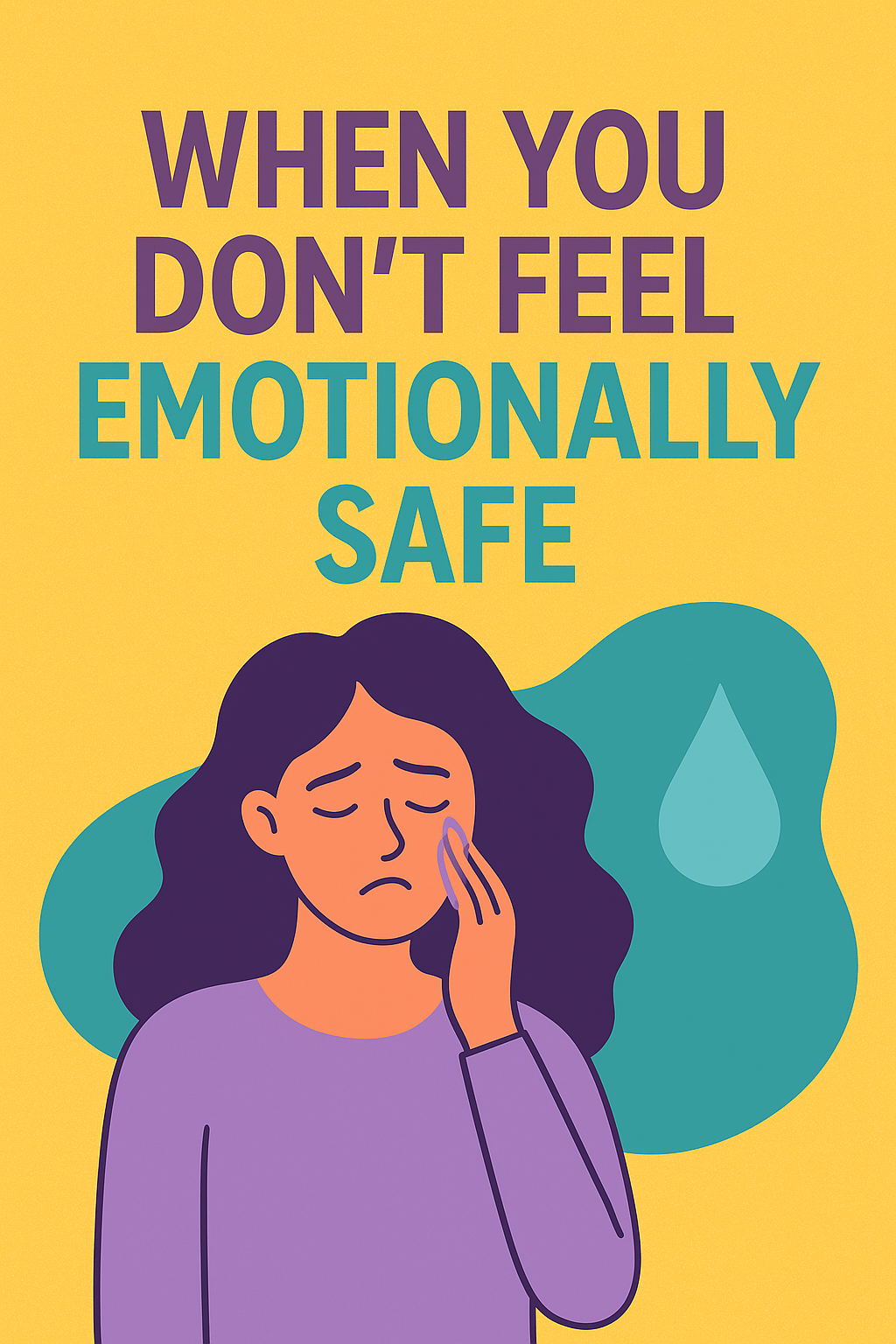
For many people, the first clue that emotional safety is missing comes through the body, sometimes in the form of frequent tears, like a valve letting out pressure you can’t contain. For almost seven months or more, I have been sobbing at any slightest thing to the point of exhaustion. I knew my body was going through it and while I am familiar with survival mode, crying unexpectedly was relatively new. Crying becomes the body’s way of saying: “I’m carrying too much, and I have nowhere safe to set it down.”
Let’s unpack what this looks like, why it matters, and how to start building the safety you deserve.
1. When Emotional Safety Is Missing in Your Body
Your body will always tell on you before your mind catches up.
Common signs include:
- Frequent tears; crying at “small” triggers because the deeper reservoir is already full.
- Tension and hypervigilance; muscles tight, shoulders raised, jaw clenched.
- Physical fatigue; exhaustion from constantly scanning for emotional danger then your body starts to demand rest.
- Somatic symptoms; stomach knots, shallow breathing, unexplained headaches and body aches.
This isn’t “being dramatic.” It’s your nervous system reacting to a constant state of perceived threat.
2. When Emotional Safety Is Missing in Your Mind
When you don’t feel safe, your thoughts become both a shield and a cage.
- Overthinking; replaying conversations to check if you “said the wrong thing.”
- Self-doubt; questioning your feelings, instincts, and decisions.
- Hyper-awareness; reading every facial expression, tone, or pause for signs of danger.
- Difficulty accepting kindness; compliments or care feel suspicious or undeserved.
This mental vigilance is exhausting, it’s like running antivirus software 24/7 in your brain.
3. When Emotional Safety Is Missing in Relationships
The absence of emotional safety changes the way you connect with others:
- Avoiding vulnerability; keeping your real thoughts and feelings locked away.
- Self-minimizing; downplaying needs to avoid “being a burden.”
- Walking on eggshells; constantly managing your words and tone to prevent conflict.
- Caretaking others’ emotions; making sure they’re okay, even if you’re not.
You may still be surrounded by people but loneliness seeps in when you can’t be fully yourself with them.
4. When Emotional Safety Is Missing in Your Emotions
Without a safe outlet, emotions either overflow or shut down completely.
- Crying as release; tears as the only pressure valve you can access.
- Loneliness; even in company, because your inner world stays hidden.
- Flashes of anger; when suppressed feelings burst through the cracks.
- Numbness; when even the overflowing becomes too much to feel.
These are not flaws, they’re signs your emotional ecosystem needs repair.
How to Build Emotional Safety in Real Life
You don’t have to wait for other people to hand you safety. You can start creating it now, both within yourself and in the spaces you choose to inhabit.
a) With Yourself
- Practice self-validation; name and honor your feelings without rushing to fix them.
- Set gentle boundaries; say no where needed to preserve your energy.
- Speak to yourself with kindness; replace harsh self-talk with the tone you’d use for a friend.
- Track your triggers; notice who, what, and where makes you tense versus at ease.
b) With Others
- Choose emotionally available people; seek relationships where listening is active, not performative.
- Ask for what you need; even if it feels awkward at first (“I just need you to hear me, not solve this”).
- Model safety; listen without judgment, respect confidentiality, and show consistency.
- Exit unsafe spaces; if possible, remove yourself from environments that chronically erode trust.
c) In Daily Life
- Create safe rituals; a journal, a prayer, a walk, a playlist that centers you.
- Protect your rest; exhaustion makes your nervous system more reactive.
- Celebrate small safety wins; every time you express yourself without fear and feel okay afterward, that’s a deposit into your emotional safety bank.
Emotional safety is not a luxury. It’s the ground you stand on to grow, connect, and thrive. When it’s missing, the cracks show up in your body, your thoughts, your relationships, and your emotions. But it can be rebuilt, one boundary, one honest conversation, one safe moment at a time.