Oh, Kemi. Again?
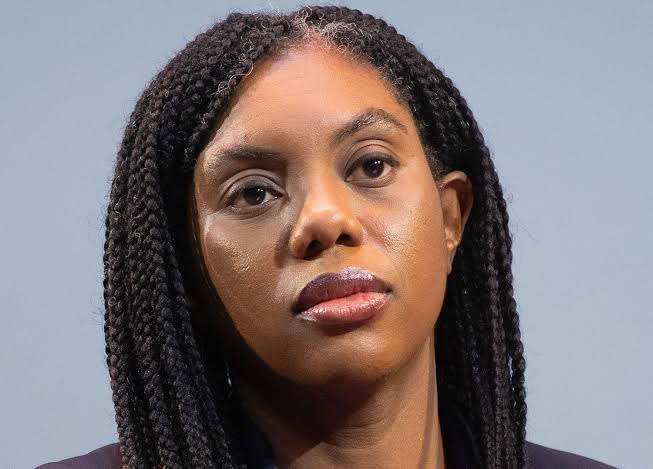
The British Conservative politician has been trending lately, not for some groundbreaking policy or inspirational reform, but for her increasingly exhausting tirades about Nigeria. Yes, the country of her birth. And it’s not the usual “we can do better” critique. No, this is bitterness dressed up in British conservatism with a colonial smugness twist.
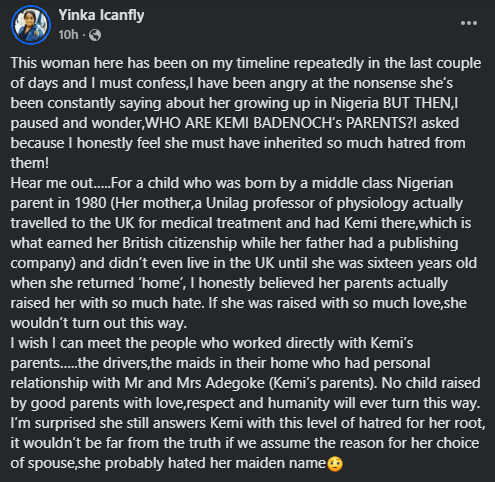
Enter Yinka iCanFly, a facebook mutual and i’d like to think of her as a culture critic whose raw, thoughts out loud, didn’t just clap back, it asked the question we’ve all been too polite to voice: Who raised Kemi Badenoch? And better yet, what the hell went wrong?
Kemi was born in Wimbledon in 1980, yes, in the UK, but only because her mother, a UNILAG physiology professor, flew there for medical treatment. She spent most of her formative years in Lagos, under the roof of educated, middle-class parents. Her father even owned a publishing business. We’re talking about privilege, bookshelves, and possibly live-in domestic staff.
So why the disdain? Why does every soundbite from her mouth feel like a rejection of home?
Yinka’s theory is audacious, yet heartbreakingly plausible: Kemi didn’t fall from grace, she was raised in a house where love may have worn a mask, or not shown up at all. And if that’s too deep for some, here’s the surface-level tea, no child bathed in warmth and cultural pride grows up spewing this much disdain for their origins.
And listen, this isn’t just a Kemi issue, it’s generational. I remember being younger and feeling almost allergic to my Nigerianness. Not because I didn’t love it, but because I was made to feel it wasn’t enough. Watching childhood friends relocate abroad only to suddenly drop the “Naija” from their tongue like hot coal, or children of immigrants proudly saying they’re “not Nigerian”? It hurt. But it also revealed something insidious: this shame was taught. It trickled down from parents who, consciously or not, glorified elsewhere and belittled home. No child wakes up one day hating where they come from, it’s learned. It’s inherited. And for too long, we’ve let that slide. Only recently, thanks to TikTok, Nollywood glow-ups, Afrobeats and loud diaspora pride, we are finally rewriting that narrative. But some, like Kemi, are still stuck in the script of shame. That builds a distorted identity and self image.
Yinka’s post is a sociopolitical slap wrapped in cultural honesty. And frankly, it’s time more of us asked the same question: Who hurt you, Kemi? And why do we all have to pay for it?